
3rd International Workshop on Quantum Software-Engineering Tools, Algorithms & Verification (Q-STAV 2026)
February 23th, 2026, Bern, Co-located with SE'2026
Scope and Topics
Quantum computers can solve certain types of computational problems that go beyond the capabilities of classical computers. Over the last years, we observe remarkable progress in developing quantum hardware that paves the way towards early fault-tolerant quantum computers in the near future. To utilize these promising new potentials, we require comprehensive methods and tools for quantum software engineering. This includes concepts being well-established for classical software engineering like appropriate modeling abstractions, programming languages, compiler construction, testing and analysis techniques and standardized development processes and guidelines. But it also requires novel approaches, such as noise-aware circuit design and entanglement-dependent distribution of quantum workloads. All these aspects are required to effectively and efficiently develop, operationalize and maintain novel quantum algorithms.
The recently started DFG priority programme 2514 Quantum Software, Algorithms and Systems Concepts, Methods and Tools for the Quantum Software Stack further pushes this topic on top of the research agenda. In this third edition, we open the workshop to involve the classical software engineering community and the quantum computing community in shaping the new research area of quantum software engineering as one of the most important and innovative topics in computer science. The goal of the workshop is to define a research roadmap and to foster collaborations between software engineering and quantum computing to create synergies between both disciplines.
Accepted Contributions
-
Alina Joch, Benedikt Fauseweh and Götz Uhrig:
Summary: Entanglement-informed construction of variational quantum circuits - Patrick Hopf, Erick Ochoa Lopez, Yannick Stade, Damian Rovara, Nils Quetschlich, Ioan Albert Florea, Joshua Izaac, Robert Wille and Lukas Burgholzer:
Integrating Quantum Software Tools with(in) MLIR - Simon Thelen and Wolfgang Mauerer:
Predict and Conquer: Navigating Algorithm Trade-offs with Quantum Design Automation - Domenik Eichhorn, Nick Poser, Maximilian Schweikart and Ina Schaefer:
ProvideQ: Short Overview of a Hybrid Optimization Toolbox - Jonas Winklmann and Martin Schulz:
Optimizing Neutral Atom Rearrangement Times using the HiPARS Sorting Library - Leon Müller, Adelina Bärligea, Alexander Knapp and Jakob S. Kottmann:
PauliEngine: High-Performant Symbolic Arithmetic for Quantum Operations - Yanbin Chen, Yu Wang, Christian Mendl and Helmut Seidl:
Classical Compiler Passes, Quantum Edition: Static Analyses for Quantum Programs - Luke Southall, Joshua Ammermann, Rinor Kelmendi, Domenik Eichhorn and Ina Schaefer:
Investigating Retargetability Claims for Quantum Compilers - Xiaorang Guo and Martin Schulz:
Hardware-Efficient Neural Networks for Low-Latency Multiplexed Superconducting Qubit Readout - Jurek Eisinger, Ferdinand Schmidt-Kaler, Ulrich Poschinger, Ludwig Schmid, Daniel Schoenberger, Robert Wille and Janine Hilder:
Computational capabilities of the trapped ion quantum computer and optimized compilation strategies
Program
| Time | Talk | Presenter | Session Chair |
|---|---|---|---|
| 09:00 - 10:00 |
Session 1 |
Malte Lochau | |
| Opening | |||
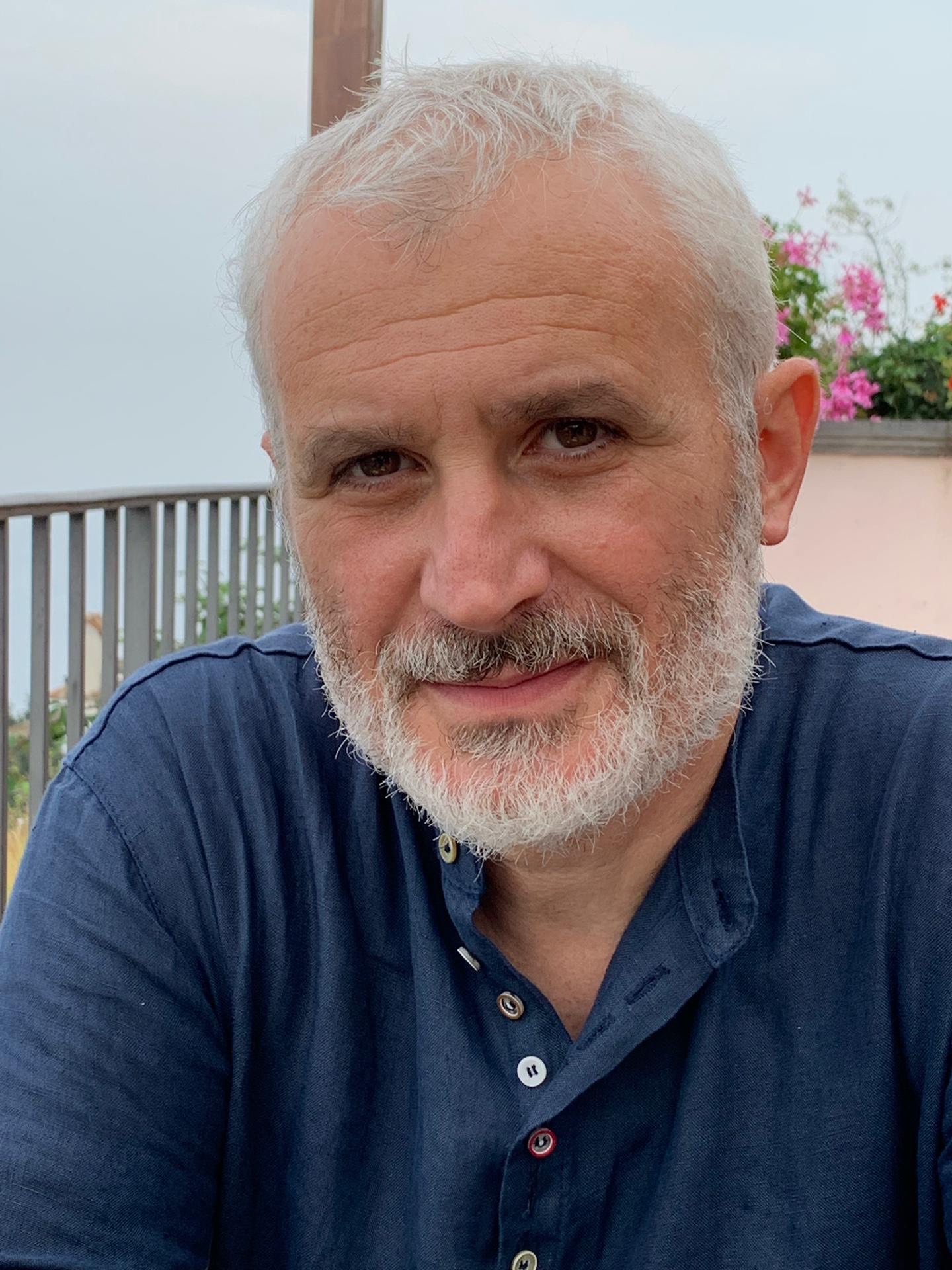
| Keynote: Quantum computing at utility scale | Ivano Tavernelli (IBM Zürich) | ||
| 10:00 - 10:30 | Coffee Break | ||
| 10:30 - 12:00 | Session 2 | Benedikt Fauseweh | |
| Entanglement-informed construction of variational quantum circuits | Benedikt Fauseweh | ||
| Integrating Quantum Software Tools with(in) MLIR | Patrick Hopf | ||
| Predict and Conquer: Navigating Algorithm Trade-offs with Quantum Design Automation | Simon Thelen | ||
| 12:00 - 13:30 | Lunch Break | ||
| 13:30 - 15:00 | Session 3 | Patrick Hopf | |
| ProvideQ: Short Overview of a Hybrid Optimization Toolbox | Domenik Eichhorn | ||
| Optimizing Neutral Atom Rearrangement Times using the HiPARS Sorting Library | Jonas Winkelmann | ||
| PauliEngine: High-Performant Symbolic Arithmetic for Quantum Operations | Leon Müller | ||
| 15:00 - 15:30 | Coffee Break | ||
| 15:30 - 17:30 | Session 4 | Anna Schmitt | |
| Classical Compiler Passes, Quantum Edition: Static Analyses for Quantum Programs | Yanbin Chen | ||
| Investigating Retargetability Claims for Quantum Compilers | Domenik Eichhorn | ||
| Hardware-Efficient Neural Networks for Low-Latency Multiplexed Superconducting Qubit Readout | Xiaorang Guo | ||
| Computational capabilities of the trapped ion quantum computer and optimized compilation strategies | Jurek Eisinger |
Keynote Speaker
 |
|
Types of Submissions
We accept two types of contributions:
- Presentation of already published papers; a short summary (2 pages in LNI format) will appear in the workshop proceedings.
Submitting a summary and its publication in the proceedings are optional. - Original, previously unpublished, papers (6-12 pages in LNI format) which will appear as full papers in the workshop proceedings.
Reviewing Process
All submissions will be reviewed by at least three program committee members following a single-blind review process. Submissions of already published papers will be only checked with respect to formal requirements and if the topic is within the scope of the workshop.
Programm Committee
- Domenique Unruh, RWTH Aachen
- Falk Howar, TU Dortmund
- Ingo Roth, Technology Innovation Institute
- Jakob Kottmann, University of Augsburg
- Jan Reiners, HQS
- Jasmin Meinecke, TU Berlin
- Jonas Haferkamp, Uni Saarbrücken
- Martin Schulz, TU München
- Robert Wille, TU München
- Sebastian Bock, Fraunhofer Fokus
- Tobias Stollenwerk, FZ Jülich
- Wolfgang Mauerer, OTH Regensburg/Siemens
- Adrián Marín Boyero, University of Siegen
Important Dates
- Paper Submission: 1 December 2025 (AoE)
- Notification: 18 December 2025 (AoE)
- Final Version: 19 January 2026 (AoE)
- Workshop: 23 February 2026
Submission Link
Organization
- Malte Lochau (University of Siegen)
- Benedikt Fauseweh (TU Dortmund / DLR)
- Anna Pappa (TU Berlin)
- Benjamin Kaminski (Saarland University)
- Ina Schaefer (KIT)
Contact
For further information, please consult the web page and contact Malte Lochau ∂does-not-exist.uni-siegen de.